
By a skincare enthusiast who’s been there | Updated March 2026
If you’re an American woman in your 30s and you’ve been standing in the skincare aisle at Target or Sephora, staring at retinol products and wondering — “Is this right for me?” — this guide is for you.
You don’t need a complicated 12-step routine. You don’t need a prescription. And you don’t need to spend hundreds of dollars.
You just need the right information — and a little patience.
What Is Retinol and Why Do American Dermatologists Swear By It?
Retinol is a Vitamin A derivative — and it’s one of the most clinically studied skincare ingredients available over the counter in the U.S.
Board-certified dermatologists from Beverly Hills to New York consistently recommend it as the #1 anti-aging ingredient for women over 30. Why? Because it works at a cellular level — not just on the surface.
Here’s what retinol does beneath your skin:
- Speeds up cell turnover — your skin refreshes itself faster, like it did in your 20s
- Boosts collagen production — helps maintain firmness and reduce fine lines
- Regulates oil — great for adult hormonal acne (yes, you can have acne AND fine lines at 35)
- Fades dark spots and pigmentation — evens out sun damage from those pool parties in your 20s
Why Your 30s Are the Perfect Time to Start Retinol
Here’s the truth that your dermatologist will tell you: your 30s are actually the ideal decade to begin retinol — not because something is wrong, but because prevention is far easier than correction.
Starting around age 30, your body:
- Produces about 1% less collagen per year
- Slows down skin cell renewal from every 28 days to every 35–45 days
- Begins hormonal fluctuations that affect oil production and pigmentation
This is completely normal biology. Retinol works with these changes — not against them.
Retinol vs Tretinoin: What’s the Difference? (Important for U.S. Shoppers)
One of the most common questions American women ask:
“Should I get a prescription for tretinoin, or is drugstore retinol enough?”
Here’s a simple breakdown:
| Product | Where to Get It | Strength | Best For |
|---|---|---|---|
| Retinol (0.1%–0.3%) | Target, CVS, Sephora, Amazon | Gentle | Beginners in their 30s |
| Retinol (0.5%–1%) | Sephora, Dermstore, brand websites | Moderate | 6+ months of use |
| Tretinoin | Prescription only (doctor/telehealth) | Strong | Advanced aging, severe acne |
| Adapalene (Differin) | Walgreens, CVS (OTC) | Moderate | Acne-prone skin |
For most women in their early-to-mid 30s: start with a 0.1%–0.3% OTC retinol. Stronger is NOT better at the beginning.
How to Start Retinol After 30: A Week-by-Week Beginner Plan
Step 1: Choose the Right Product
Look for retinol in a cream formula if your skin is dry or sensitive. Serums work well if your skin is oily or combination.
Affordable options at U.S. drugstores and retailers:
- RoC Retinol Correxion (Walgreens, Target)
- Neutrogena Rapid Wrinkle Repair (CVS, Walmart)
- CeraVe Resurfacing Retinol Serum (Target, Ulta)
- Olay Regenerist Retinol 24 (Target, Amazon)
- Differin Adapalene Gel (Walgreens, CVS) — especially for acne-prone skin
Not sure which retinol serum to pick? We’ve done the research for you — check out our detailed guide on the best retinol serums for beginners to find your perfect match.
Step 2: Start Low and Slow
Week 1–2: Use once a week, on a Wednesday night. That’s it.
Week 3–4: Increase to twice a week.
Month 2–3: Increase to every other night if skin feels comfortable.
Month 4+: Some women work up to nightly use. Others stay at 3–4 nights per week. Both are fine.
Step 3: The Pea-Size Rule
Use only a pea-sized amount for your entire face. More product = more irritation, not better results.
Step 4: The Sandwich Method (For Sensitive Skin)
If you’re nervous about irritation — especially common in dry U.S. winter climates:
- Apply moisturizer first
- Apply pea-sized retinol
- Apply another thin layer of moisturizer
This “buffers” the retinol and reduces dryness significantly.
Step 5: SPF Every Single Morning — Non-Negotiable
Retinol increases sun sensitivity. If you skip SPF, you’re undoing your results.
Recommended U.S. drugstore SPFs to pair with retinol:
- Neutrogena Ultra Sheer SPF 55
- EltaMD UV Clear SPF 46 (great for acne-prone skin)
- La Roche-Posay Anthelios SPF 60
- Supergoop! Unseen Sunscreen SPF 40
What to Expect: Your First 12 Weeks on Retinol
This is the timeline most American dermatologists will give you:
Weeks 1–2 (Adjustment): Mild dryness or tightness is normal. Some women feel a slight flush after applying. Keep moisturizing. Keep your sunscreen consistent.
Weeks 3–4 (Possible Purge): Light flaking or small breakouts can occur. This is your skin pushing out clogged pores faster. It’s temporary — typically lasts 2–4 weeks.
Weeks 5–8 (Small Wins): Texture starts smoothing. Makeup applies more evenly. Breakouts may start reducing.
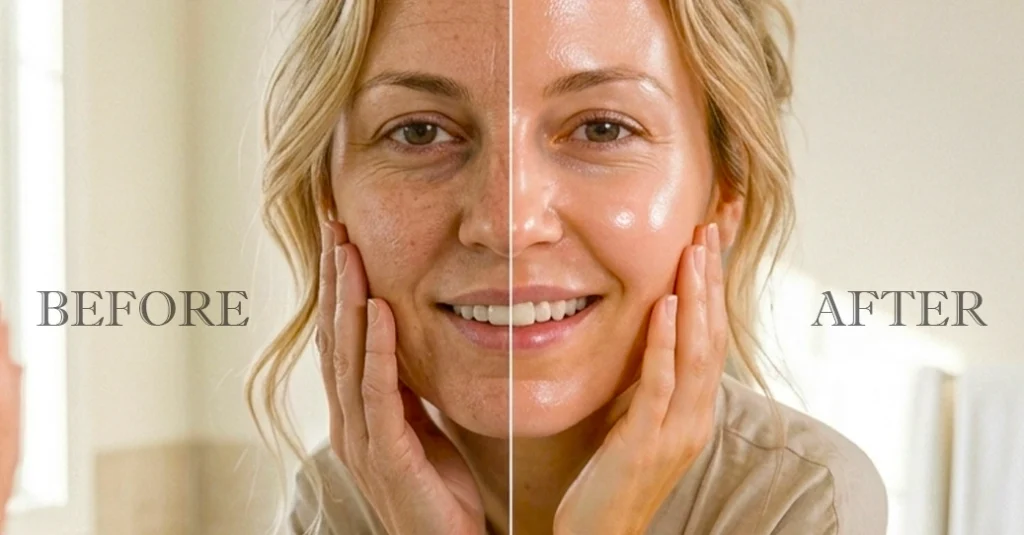
Weeks 8–12 (Visible Results): Brighter skin tone, softer fine lines, more even pigmentation. This is where consistency starts paying off.
6 Months+: Noticeable firmness improvement. This is the long game — and it’s worth it.
The Retinol Purge: Is It Real?
Yes — and it’s temporary.
When retinol speeds up cell turnover, clogged pores that were forming beneath the surface come up faster. This can look like a breakout.
The retinol purge typically lasts 2–6 weeks. If breakouts persist beyond that, reduce usage frequency or consult a dermatologist.
Common Retinol Mistakes American Women Make (And How to Avoid Them)
Starting too strong. Many women grab a 1% retinol serum on day one and wonder why their skin is peeling. Start at 0.1% and work up.
Using it every night right away. This leads to irritation and quitting. Start with once a week.
Skipping moisturizer. Retinol + dry skin = unnecessary irritation. Always moisturize.
Forgetting SPF. This one can’t be stressed enough. Your results depend on daily SPF use.
Mixing with AHAs or BHAs too early. Don’t layer glycolic acid, lactic acid, or salicylic acid with retinol in the beginning.
Quitting after 3 weeks. Most people don’t see real results until weeks 8–12. Stay consistent.
Retinol and Hormonal Changes in Your 30s
Adult Acne
If you’re dealing with jawline or chin breakouts around your cycle — very common in American women in their 30s — retinol can help. It regulates oil production and prevents clogged pores.
Postpartum Skin
After pregnancy, hormone shifts can cause melasma, dryness, or breakouts. Retinol can help restore balance — but only after you’ve finished breastfeeding.
Early Perimenopause
Some women in their late 30s begin noticing dryness, thinner-looking skin, or loss of firmness. Retinol’s collagen-supporting benefits become especially valuable here. And if you’re heading into your 40s, you may also want to explore targeted treatments — our guide to the best wrinkle creams for women over 40 covers the most effective options for this stage of life.
Who Should NOT Use Retinol
- Pregnant women — avoid all Vitamin A derivatives
- Breastfeeding mothers — consult your OB-GYN first
- Women with active eczema or rosacea — consult a dermatologist before starting
- Anyone on photosensitizing medications — check with your doctor
A Simple Retinol Routine for Busy American Women
Life in your 30s is full. Careers, kids, relationships — skincare has to be realistic. Here’s the simplest version that actually works:
Morning (Every Day):
- Gentle cleanser
- Lightweight moisturizer
- SPF 30 or higher — always
Retinol Nights (1–4x per week depending on tolerance):
- Gentle cleanser
- Optional: thin layer of moisturizer (for sensitive skin)
- Pea-sized amount of retinol
- Moisturizer to seal it in
Non-Retinol Nights:
- Gentle cleanser
- Hydrating serum (hyaluronic acid is great)
- Richer moisturizer for barrier repair
That’s it. No 10-step routine required.
Ingredients That Pair Well with Retinol
- Hyaluronic Acid — counters dryness, found in many U.S. drugstore products
- Ceramides — strengthens your skin barrier (CeraVe products are excellent for this)
- Niacinamide — reduces redness, great for acne + aging combination
- Peptides — once you’ve built tolerance (after 8–12 weeks)
Retinol Myths: Debunked
“Retinol thins your skin.” FALSE. It may thin the outermost dead layer initially, but over time it thickens the deeper layers by stimulating collagen.
“It’s only for older women.” FALSE. Starting in your 30s is actually ideal — you’re maintaining collagen before significant loss occurs.
“You can’t use it in summer.” FALSE — as long as you wear SPF daily. Sun protection is required year-round.
“It’s too harsh for sensitive skin.” NOT necessarily. Low concentrations (0.1%) introduced slowly work for most sensitive skin types.
Frequently Asked Questions
Can I use retinol every night?
Not when you’re starting. Begin with 1–2 nights per week. Some women eventually build up to nightly use, while others stay at 3–4 nights per week and see excellent results.
Can I use retinol with Vitamin C?
Yes — use Vitamin C in the morning and retinol at night. They actually complement each other beautifully.
Is prescription tretinoin better than drugstore retinol?
Tretinoin is stronger and faster-acting, but comes with higher irritation risk. For most women starting in their early 30s, a quality OTC retinol is more than effective. U.S. telehealth platforms like Apostrophe, Curology, or your dermatologist can prescribe tretinoin if you want to go that route later.
What age should I start retinol?
Most U.S. dermatologists recommend starting in your late 20s to early 30s. You don’t need visible wrinkles to begin — prevention is easier than correction.
My skin burned after using retinol — what do I do?
Stop for a few days. Focus on gentle cleansing and heavy moisturizing. Once your skin feels calm, restart at a lower frequency using the sandwich method.
Final Thoughts
Your 30s aren’t something to fight against. They’re strong, capable, self-aware years.
Retinol, when started thoughtfully and used consistently, can help your skin look smoother, brighter, and more resilient over time. Not because you’re chasing youth — but because you’re taking care of yourself.
Start slow. Protect your skin. Be patient.
And remember: consistency will always outperform intensity.
Always consult a board-certified dermatologist for personalized skincare advice. This article is for informational purposes only.

Jessica Brooks writes the skincare guides on BelleNora. Her articles are based on published dermatology guidelines, research studies, and product ingredient lists. Content is for education only and is not medical advice.