
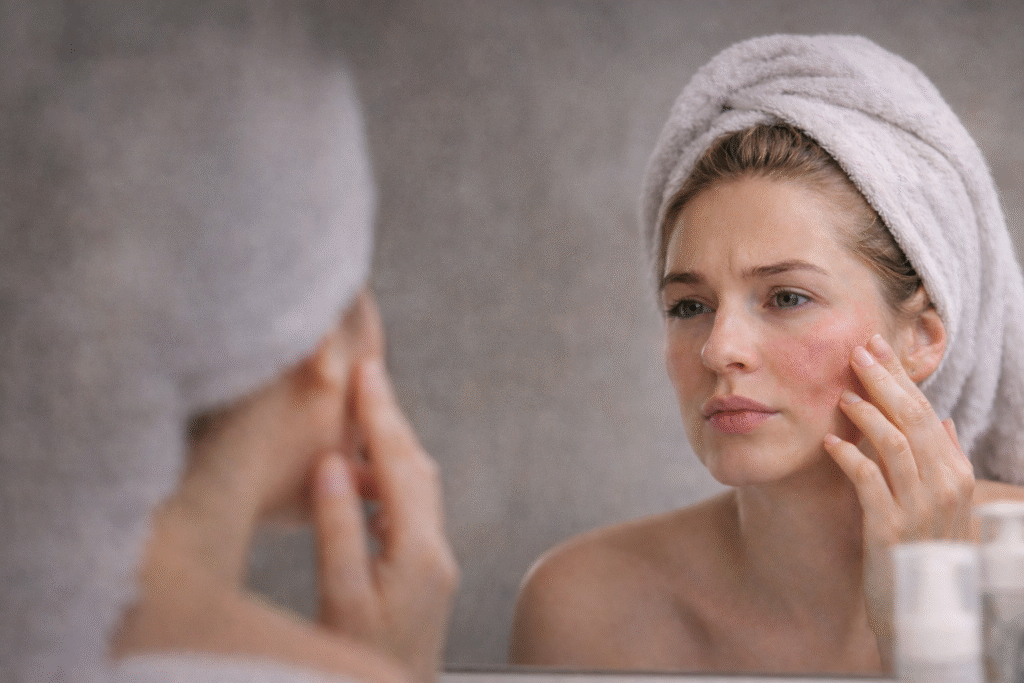
When Your Skin Just Feels “Off”
Let’s be honest. We’ve all had that phase where our skin just feels weird.
You wash your face and it feels tight.
You apply moisturizer and five minutes later it still feels dry.
You try a serum and suddenly it stings.
Most of the time, this isn’t just dry skin. It’s your skin barrier asking for help.
Your skin barrier is like your face’s security system. It keeps hydration in and irritation out. When it’s healthy, your skin feels soft, calm, and balanced. When it’s damaged, everything feels sensitive and unpredictable.
The good news is that fixing it doesn’t require a complicated routine. It requires slowing down and giving your skin exactly what it needs.
What Is the Skin Barrier?
Your skin barrier is the outermost layer of your skin. It is made up of skin cells held together by natural lipids like ceramides, cholesterol, and fatty acids.
Think of it like bricks and cement.
The skin cells are the bricks.
The lipids are the cement holding everything together.
When that cement weakens, small gaps form. Moisture escapes easily, and irritants enter faster. That’s when redness, dryness, and breakouts start showing up.
Signs Your Skin Barrier Is Damaged
Not sure if your barrier is the issue? Here are common signs:
- Products suddenly burn or sting
- Skin feels tight even after moisturizing
- Random breakouts appear
- Redness stays longer than usual
- Flaky or rough patches
- Dull, uneven texture
- Makeup sits poorly on the skin
If you notice even a few of these consistently, your barrier may need repair.
What Causes Skin Barrier Damage?
Sometimes we damage our skin while trying to improve it.
Over-Exfoliation
Using scrubs, AHAs, or BHAs too frequently can strip away protective lipids.
Overusing Active Ingredients
Retinol, strong vitamin C, and multiple serums layered together can overwhelm the skin.
Harsh Cleansers
Foaming cleansers with strong surfactants can remove natural oils.
Skipping Sunscreen
UV exposure weakens the barrier over time.
Lifestyle Factors
Stress, lack of sleep, pollution, and hot showers can all contribute.
Ingredients That Actually Help Repair the Skin Barrier
You don’t need dozens of products. Focus on these supportive ingredients.
Ceramides
Ceramides are essential lipids naturally found in the skin. They help rebuild the protective layer and reduce moisture loss.
Niacinamide
Niacinamide helps calm redness, strengthen the barrier, and improve overall texture.
Panthenol
Panthenol is soothing and supports healing, especially when skin feels irritated.
Hyaluronic Acid
This ingredient pulls water into the skin, keeping it hydrated and comfortable — if you want to balance hydration from your moisturizer too, check out our guide to the best moisturizers for combination skin in 2026 that work for oily T-zone and dry cheeks.
Squalane and Fatty Acids
These mimic natural skin oils and help restore flexibility.
Colloidal Oatmeal
Oatmeal-based products are especially calming for very sensitive skin.
A Simple Skin Barrier Repair Routine
Keep it simple and consistent.
Morning Routine
Gentle Cleanse
Use a mild, non-stripping cleanser or rinse with lukewarm water if your skin is very dry.
Hydrating Layer
Apply a hydrating toner or serum with hyaluronic acid or glycerin.
Moisturizer
Choose a ceramide-rich cream to lock in hydration.
Sunscreen
And if you’re unsure which sunscreen works best for combination skin, explore our detailed guide on the best sunscreens for combination skin to find the ideal formula for your oily T-zone and dry cheek
Night Routine
Cleanse Gently
Remove dirt and sunscreen without over-washing.
Barrier Repair Serum
Use a serum containing niacinamide, ceramides, or panthenol.
Nourishing Moisturizer
Seal everything in with a richer cream if your skin feels dry.
That’s it. No exfoliation. No retinol. No experiments.
Damaged Skin Barrier vs Dehydrated Skin
These two are often confused.
Dehydrated skin lacks water. It feels tight but usually is not very red or irritated.
A damaged barrier lacks protective lipids. It feels reactive, sensitive, and easily inflamed.
If irritation is present, focus on repair, not just hydration.
How Long Does Barrier Repair Take?
Healing takes patience.
- Mild damage: 1 to 2 weeks
- Moderate damage: 3 to 4 weeks
- Severe damage: 6 to 8 weeks
You will know it’s improving when:
- Products stop stinging
- Redness decreases
- Skin feels softer
- Texture becomes smoother
- Breakouts reduce
Consistency matters more than speed.
What to Avoid While Healing
Avoid anything that stresses the skin.
- Strong exfoliating acids
- Physical scrubs
- Frequent retinol use
- High-strength vitamin C
- Alcohol-heavy toners
- Constantly switching products
During recovery, simple is powerful.
Lifestyle Habits That Support Healing
Barrier repair isn’t only about products.
- Sleep 7 to 8 hours
- Drink enough water
- Eat healthy fats
- Manage stress
- Use lukewarm water instead of hot
Skin heals best when your body is supported.
When to See a Dermatologist
If irritation becomes severe, painful, or persistent, consult a dermatologist. Conditions like eczema or dermatitis may require medical treatment.
For most mild cases, simplifying your routine is enough.
Final Thoughts
Repairing your skin barrier is not about buying more skincare. It is about being consistent and gentle.
When your barrier is strong, your skin feels comfortable, balanced, and resilient. Breakouts reduce. Glow returns naturally.
Give your skin time. Stop overwhelming it. Support it with the right ingredients.
Healthy skin starts with a healthy barrier.
✅ FAQ
You can paste this at the end of your article.
Frequently Asked Questions
How do I know if my skin barrier is damaged?
Common signs include redness, burning or stinging when applying products, tightness after cleansing, flakiness, and sudden breakouts. If your skin feels irritated even with gentle products, your barrier may be compromised.
How long does it take to repair a damaged skin barrier?
Mild damage may improve in 1 to 2 weeks. Moderate damage can take 3 to 4 weeks. Severe cases may require 6 to 8 weeks of consistent care.
Can I use retinol while repairing my skin barrier?
It is best to pause retinol until your barrier feels stable again. Using strong actives during repair can slow down healing and increase irritation.
Are ceramides really necessary for barrier repair?
Yes. Ceramides are essential lipids that help rebuild the skin’s protective layer and prevent moisture loss. They are one of the most important ingredients for recovery.
What should I avoid when my skin barrier is damaged?
Avoid exfoliating acids, scrubs, high-strength vitamin C, alcohol-based toners, and frequent product changes. Keep your routine simple and gentle.
Is a damaged skin barrier the same as dehydrated skin?
No. Dehydrated skin lacks water, while a damaged barrier lacks protective lipids. Barrier damage usually involves redness and irritation along with dryness.

Jessica Brooks writes the skincare guides on BelleNora. Her articles are based on published dermatology guidelines, research studies, and product ingredient lists. Content is for education only and is not medical advice.