
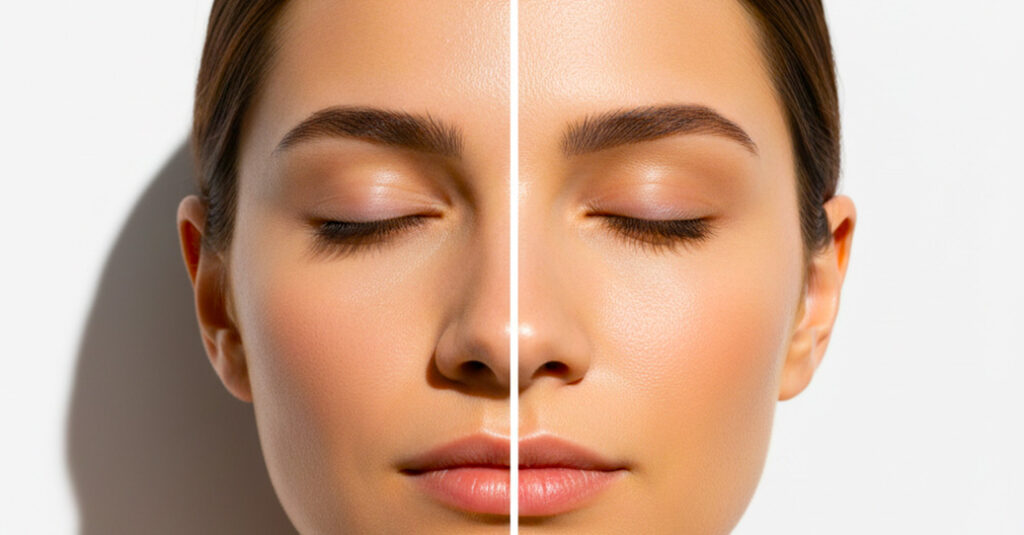
Best sunscreen for combination skin can be hard to find when your T-zone is oily but your cheeks feel dry.
Combination skin is confusing.
Your T-zone gets oily by noon.
Your cheeks feel dry.
And sunscreen? It somehow manages to make both worse.
Too heavy, and your forehead turns shiny.
Too light, and your cheeks feel tight and uncomfortable.
If this sounds familiar, you’re not alone. A lot of women with combination skin struggle to find a sunscreen that actually works everywhere on their face.
Let’s break it down—without overcomplicating things.
What Combination Skin Really Means
Combination skin usually looks like this:
-
- Oily T-zone (forehead, nose, chin)
-
- Normal to dry cheeks
-
- Occasional breakouts and dry patches
-
- Makeup separating by midday
And no, it’s not “normal skin with a little oil.”
It’s its own thing.
That’s why sunscreen needs to be balanced—not greasy, not drying.
Why Combination Skin Still Needs Daily Sunscreen
Some people think only oily or dry skin needs special care. Not true.
UV damage can:
-
- Increase oil production in your T-zone
-
- Dry out already-dry areas
-
- Trigger pigmentation
-
- Break down collagen unevenly
Over time, sun exposure makes combination skin more unbalanced.
Daily sunscreen helps stabilize your skin long-term.
What to Look for in a Sunscreen for Combination Skin
You don’t need extremes. You need balance.
Lightweight but Not Drying
Gel-cream or fluid textures usually work best.
Oil-Free or Oil-Controlled
Especially for the T-zone.
Hydrating Ingredients (Light Ones)
Look for:
-
- Glycerin
-
- Hyaluronic acid
-
- Squalane
Non-Comedogenic
You don’t want clogged pores on oily areas.
SPF 30+
Enough for daily protection without heaviness.
Mineral or Chemical Sunscreen for Combination Skin?
This depends on how sensitive you are.
Chemical Sunscreens
-
- Lightweight
-
- Invisible finish
-
- Better under makeup
But they can irritate sensitive cheeks.
Mineral Sunscreens
-
- Calmer on skin
-
- Slightly heavier
Many women with combination skin prefer hybrid formulas (mineral + chemical).
They’re the best of both worlds.
Best Sunscreens for Combination Skin in 2026
These work well across oily and dry areas.
EltaMD UV Clear SPF 46
A favorite for a reason.
-
- Lightweight
-
- No greasy finish
-
- Works for acne-prone areas
-
- Gentle on dry patches
Great if your skin can’t decide what it wants.
La Roche-Posay Anthelios Melt-In Milk SPF 60
Balanced and reliable.
-
- Hydrating without being heavy
-
- Works well in different climates
-
- Good under makeup
Especially nice in dry or air-conditioned environments.
Supergoop! Unseen Sunscreen SPF 40
If you wear makeup often, this helps.
-
- Primer-like texture
-
- No shine
-
- Doesn’t cling to dry areas
Feels weightless but still protective.
Neutrogena Hydro Boost SPF 50
Affordable and easy to find.
-
- Water-gel texture
-
- Hydrating but light
-
- Good for everyday use
A solid option if you want something simple.
CeraVe Ultra-Light SPF 30
Great for minimal routines.
-
- Ceramides support skin barrier
-
- Lightweight lotion feel
-
- Fragrance-free
Especially good if your cheeks lean dry.
How to Apply Sunscreen on Combination Skin (This Helps a Lot)
Application can make or break it.
Try this:
-
- Cleanse gently
-
- Use a light moisturizer only on dry areas
-
- Apply sunscreen evenly
-
- Use less powder on dry areas
-
- Blot oil instead of layering more product
 You don’t have to treat your whole face the same way.
A Simple Morning Routine for Combination Skin
Morning
-
- Gentle cleanser
-
- Lightweight moisturizer (cheeks only if needed)
-
- Balanced sunscreen SPF 30+
-
- Light makeup or tinted sunscreen
Midday
-
- Blot oil
-
- Reapply sunscreen where needed
Simple routines keep combination skin happier.
Common Mistakes Combination Skin Types Make
-
- Using heavy creams everywhere
-
- Skipping moisturizer completely
-
- Over-powdering oily areas
-
- Ignoring dry patches
-
- Switching sunscreens too often
Balance > perfection.
FAQs
Is gel sunscreen best for combination skin?
Often, yes. But gel-creams are usually better.
Can combination skin use mineral sunscreen?
Yes, especially hybrid formulas.
Why does sunscreen separate on my face?
Too heavy products or uneven skin prep.
Is SPF 50 necessary?
SPF 30 is fine daily. SPF 50 for long sun exposure.
Final Thoughts
Combination skin isn’t difficult—it’s just misunderstood.
You don’t need a “strong” sunscreen or a “rich” one.
You need something balanced.
In 2026, there are plenty of sunscreens that protect without making one part of your face oily and the other uncomfortable. When sunscreen feels invisible on your skin, you’re using the right one.

Jessica Brooks is a Brooklyn-based skincare writer and beauty researcher with 5+ years of experience personally testing and reviewing skincare products. She specializes in helping real women find SPF, serums, and routines that actually work for their skin type.